Rural voices still matter

For many Americans, federalism sounds like an abstract concept discussed in classrooms or debated by political commentators in Washington, D.C. But in reality, federalism has always been deeply connected to everyday life in rural America. For Iowa and other states like it, federalism is not merely a technical division of power between Washington and the states. It is a safeguard that ensures rural communities still have a meaningful voice in a vast and diverse nation.
At its core, the American system was never intended to create a single, centralized government that administered policies downward to 50 subordinate states. When the founders met in Philadelphia in 1787, they drafted a Constitution that established a republican form of government, limited federal power and preserved a significant measure of sovereignty and independence for the states.
The federal government was meant to exercise limited and defined powers, while the states remained equal partners in the constitutional system. In Federalist No. 45, James Madison wrote: “The powers delegated by the proposed Constitution to the federal government are few and defined. Those which are to remain in the State governments are numerous and indefinite.” The Tenth Amendment later reinforced that principle.
Historian Allen Guelzo correctly points out that the “Constitution never set out to create a streamlined national government.” The late constitutional scholar James McClellan similarly observed that the “entire Constitution is actually honeycombed with provisions designed to protect the residual sovereignty and interests of the states and to give them influence in the decision-making process at the national level.”
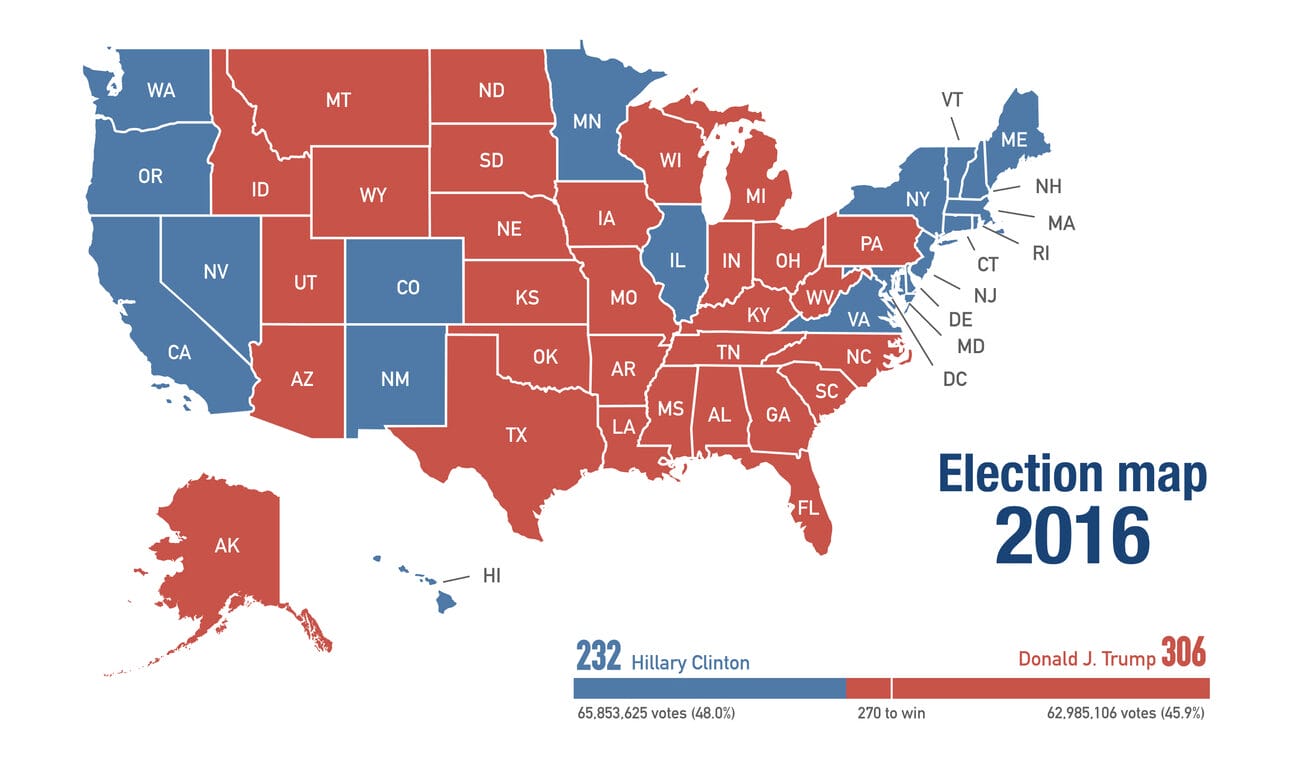
One of the clearest examples of this constitutional design is the Electoral College.
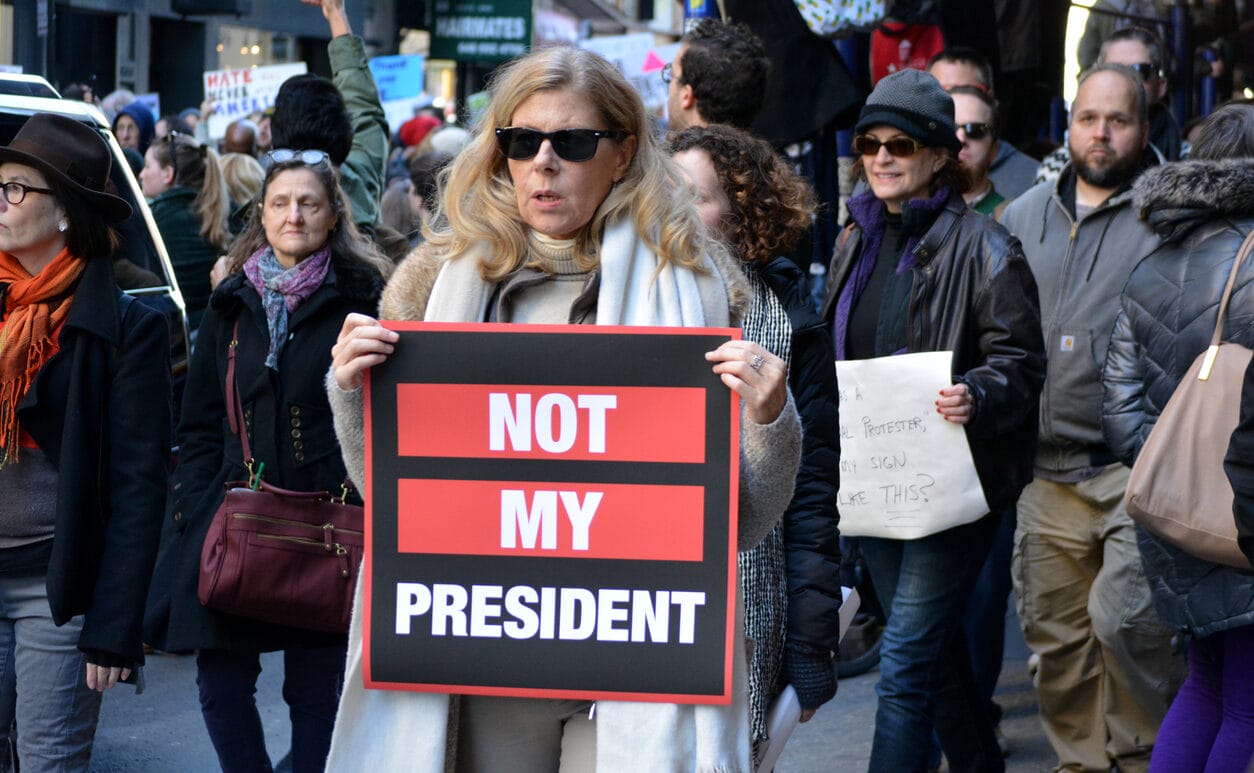
Today, critics often portray the Electoral College as outdated or undemocratic, with many touting the National Popular Vote movement, or something similar, as the antidote. But the Electoral College was not an accident or a compromise of convenience. The founders rejected a direct national popular vote because they understood that the United States was not intended to function as a pure national democracy, where population alone determined every political outcome. They wanted to ensure that presidents would have to build support across different states and regions rather than simply appeal to a handful of densely populated areas.
The case for the Electoral College is also a case for preserving rural America itself.
Although presidential elections are often discussed as national contests, they are, in practice, state-run elections conducted under state authority. States establish their own election laws and oversee their own voting procedures, while parties and state officials set the rules and timing for primaries and caucuses. The states remain central participants in the process.
This debate is ultimately about far more than election mechanics. The case for the Electoral College is also a case for preserving rural America itself.
Perhaps nowhere is that more evident than in Iowa. In many ways, Iowa serves as a useful proxy for many states in what is often dismissed as “flyover country.” While every state has its own distinct culture and economy, Iowa reflects many of the characteristics and concerns that define much of small-town and rural America: an agricultural foundation, small and mid-sized communities, manufacturing and energy production, strong civic traditions, and a population spread across wide geographic areas rather than concentrated in large metropolitan centers. When national political systems either empower or diminish Iowa’s voice, they often do the same to countless other rural states and communities across the country.
With the Electoral College in place, Iowa and its six electoral votes, still has a meaningful voice in presidential politics. In competitive elections, those votes matter.
More importantly, the Electoral College requires presidential candidates to engage with rural America rather than focus exclusively on large urban population centers. Presidential hopefuls regularly visit Iowa diners, county fairs, family farms, manufacturing plants, town halls and the Iowa State Fair. They speak directly with voters in communities that would receive far less attention under a national popular vote system.
That is not merely political tradition. It is federalism in action.
Rural voters cannot be treated as an afterthought. Without the Electoral College, campaigns, political resources, and policy priorities would increasingly concentrate in major metropolitan areas, leaving rural states and small-town communities with far less influence in the national conversation.
Rural communities already face serious challenges: population decline, economic pressure, the collapse of family farming in some areas, consolidation in agriculture and industry, and burdensome federal regulations often crafted far from the communities they affect. Further centralizing political power would only deepen the sense that rural Americans are governed by distant institutions that neither understand nor prioritize their way of life.
The broader concern is that the weakening of federalism has already been occurring for generations.
Since the early 20th century, some have argued that the American founding and constitutional limits on federal power are outdated. Particularly since the 1930s, the federal government has expanded dramatically in size and scope. As Washington has assumed more responsibilities, states have lost sovereignty and become increasingly dependent on federal funding, mandates and administrative control.
Federalism should serve as a backstop against that dynamic, dividing power, protecting liberty, and allowing states to govern according to the needs and values of their own citizens. It preserves balance within an incredibly diverse country.
Iowa is not California. Rural Nebraska is not Manhattan. Small-town America does not always share the same priorities, industries, economies, or cultural assumptions as large urban centers. Federalism acknowledges those differences and creates space for them to coexist within one nation.
The debate over the Electoral College is ultimately about more than how Americans choose a president. It is about whether the United States will continue operating as a constitutional republic built on federalism and state sovereignty or move toward a system in which political power becomes increasingly centralized in a handful of large population centers.
For rural America and states such as Iowa that represent it, the Electoral College helps ensure that small towns and far-flung communities still have a meaningful voice in the national conversation. That was not a flaw in the founders’ design; it was one of its central purposes.
John Hendrickson is policy director for Iowans for Tax Relief Foundation.