How many more Minnesotas?

The moral hazard of unaccountable aid
“Minneapolis is a New England town on the upper Mississippi,” wrote the muckraking journalist Lincoln Steffens in January 1903. Like the Puritans of the early republic, turn-of-the-century Midwestern Swedes “work hard, they make money, they are sober, satisfied, busy with their own affairs. There isn’t much time for public business.” They merely ask politicians to enact “strict laws” against vice. “The people who were left to govern the city,” however, “hated above all things strict laws. They were the loafers, saloonkeepers, gamblers, criminals, and the thriftless poor of all nationalities.”
His description of local leadership turning a blind eye to organized corruption could have been ripped from the headlines, as modern-day investigative reporters document widespread misappropriation of federal funds by Minneapolis’ Somali community.
From COVID-era food programs to Potemkin village daycares, some estimate the amount embezzled in the Twin Cities alone comes tobillions of dollars. However, the temptation to cheat federally funded programs extends beyond any one city, ethnic group, or service sector; it is embedded in the system. From the land of 10,000 lakes to the most remote regions of the Yukon, every federal tax dollar dropped into the local economy radiates concentric circles of fraud.
Minneapolis-St. Paul earned unwanted attention when Steffens’ latter-day successor, Nick Shirley, posted an undercover video exposing that such Somali-run educational institutions as the “Quality Learing Center” apparently received federal funding while enrolling few or no students. This followed news that another Somali-run nonprofit, Feeding Our Future, defrauded $246 million from a federal program to feed hungry children during the COVID-19 pandemic. Some of the purloined dollars reportedly made their way to the al-Qaeda terrorist affiliate al-Shabaab.
A full-scale investigation is underway, but Minneapolis is far from alone. In January, the U.S. Department of Health and Human Services announced that Maine, which is also home to a large Somali diaspora, made “at least $45.6 million in improper fee-for-service Medicaid payments for rehabilitative and community support” services.
Whistleblowers say the fraud extends to Gateway Community Services, where CEO Abdullahi Ali ran for president of the Somali province of Jubaland during his tenure at the company. One former employee reportedly witnessed “timecards being manipulated to show services being provided [which] were not.” Another, Christopher Bernardini, said mournfully, “I have a passion for helping people and I thought that we were doing the right thing this whole time.” His remorse underscores how such schemes deprive the truly needy. The Trump administration’s administrator of the Centers for Medicare and Medicaid Services, Dr. Mehmet “Doc” Oz, pinpointed the issue in a letter to governors on November 25, writing, “Fraud is not only a financial offense — it is a moral one.”
To be sure, state and local officials bear some measure of culpability — perhaps even complicity — in the swindle. Minnesota’s whistleblowers told Congress that state bureaucrats sought out employees who mentioned words like “fraud,” “double-billing,” or “overpayment,” not for commendation, but investigation and harassment. Governor Tim Walz (D) saw to it that whistleblowers got “fired with cause, so they couldn’t have unemployment insurance, that they would be blacklisted from all state agencies,” testified State Rep. Marion Rarick, R-29B, before the House Oversight Committee in January.
The problem extends to all 50 states.An April 2025 report from the Department of Labor (DOL) Inspector General disclosed that state workforce agencies undercounted $23.5 billion in potential overpayments of federal funds, “did not consistently use the recovery methods mandated by law,” and “waived more overpayments ($3.8 billion) than they recovered ($2.5 billion).”
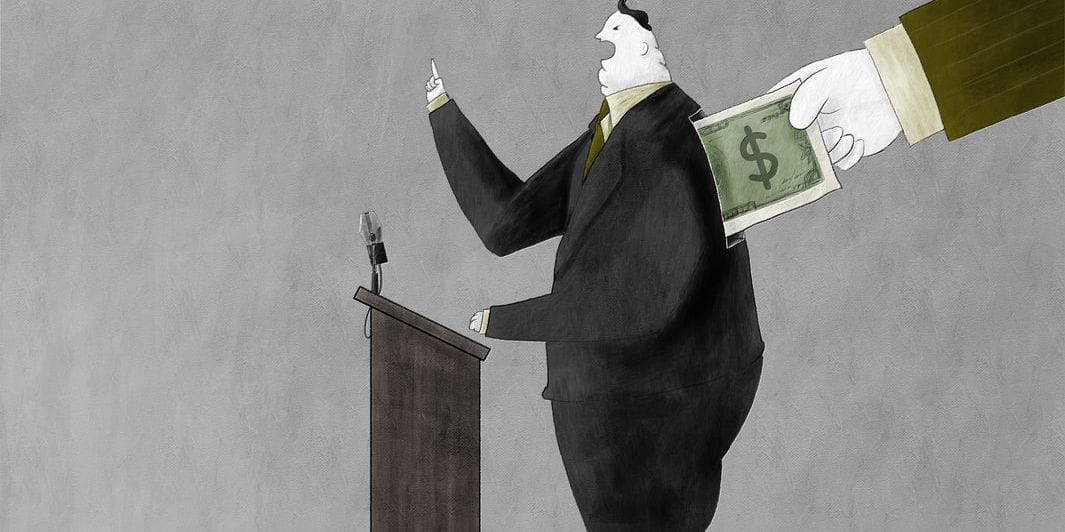
Illicit behavior follows national funding. Across programs, “the federal government could lose between $233 billion and $521 billion annually,” read a 2024 report from the Government Accountability Office, or $1.17 trillion to $2.61 trillion in fraud every five years. The largest federal handout created the largest act of fraud in U.S. history: COVID-19 relief. The Government Accountability Office found $300 billion of overpayments in COVID-era unemployment programs from 2020 to 2023, resulting in 2,532 convictions to date.
The docket of fraud cases grows fullest when the aperture of federal funds opens the widest. Milton Friedman explained the reasons in his notable discourse on four ways to spend money:
“You can spend your own money on yourself. When you do that, why then you really watch out what you’re doing, and you try to get the most for your money. Then you can spend your own money on somebody else. For example, I buy a birthday present for someone. Well, then I’m not so careful about the content of the present, but I’m very careful about the cost. Then, I can spend somebody else’s money on myself. And if I spend somebody else’s money on myself, then I’m sure going to have a good lunch! Finally, I can spend somebody else’s money on somebody else. And if I spend somebody else’s money on somebody else, I’m not concerned about how much it is, and I’m not concerned about what I get. And that’s government.”
Indifference to quality breeds blindness to fraud. Every government worker and agency head knows the first rule of bureaucracy: Never do anything that reduces funding. Keep the money flowing, especially if it originates at another level of government. In this case, big government is a near occasion of sin, virtually begging for abuse.
Federal aid to states is economically inefficient, arguably unconstitutional, and incentivizes fraud. As Washington redistributes tax funds across the nation, “the sky is black with crisscrossing dollars,” wrote William F. Buckley Jr. This creates an “economy of illusion, made possible by the systematic mystification of politicians,” and “permits economic profiteering by politically mobilized economic groups at the expense of those not mobilized.” Originalists find no constitutional warrant for interstate transfers. “[T]he first on-going, federal cash grant to states, other than for the support of the National Guard, was not adopted until 1879,” noted the Congressional Research Service. And all should realize federal programs incentivize fraud.
America needs honest local partners, requisite oversight, and federal enforcement powers to observe and safeguard federal funds. Officials at every level of government must be committed to protecting taxpayer dollars while preserving programs for the truly needy. Minnesota lawmakers’ bipartisan efforts to establish an Office of Inspector General with broad investigative powers are a welcome start. So, too, are federal oversight measures. Trump administration attempts to crack down on one class of ineligible recipients, illegal immigrants, has proven so successful that more than four in 10 ”likely undocumented” immigrants or their household members did not apply for (46%) or stopped participating in (42%) a government welfare program, according to a KFF/New York Times survey. While consistent enforcement of government policies helped curtail lawbreaking across the board, the federal government is merely solving a problem of its own creation.
Steffens related that when a new mayor came into Minneapolis to combat the gambling syndicates of his day, “Vice rose right up to tempt or to fight him.” The federal government ought not to tempt vice by flooding cities with unaccountable money. In this case, big government is a near occasion of sin, virtually begging for abuse.
V. Rev. Benjamin Johnson (@therightswriter) is an Eastern Orthodox priest with more than two decades of experience as a conservative editor, commentator, and radio talk show host. His views are his own.