The states’ declaration of dependence
Dependence leads most governors to accept the yoke from Washington. But it is possible to fight back, and win.
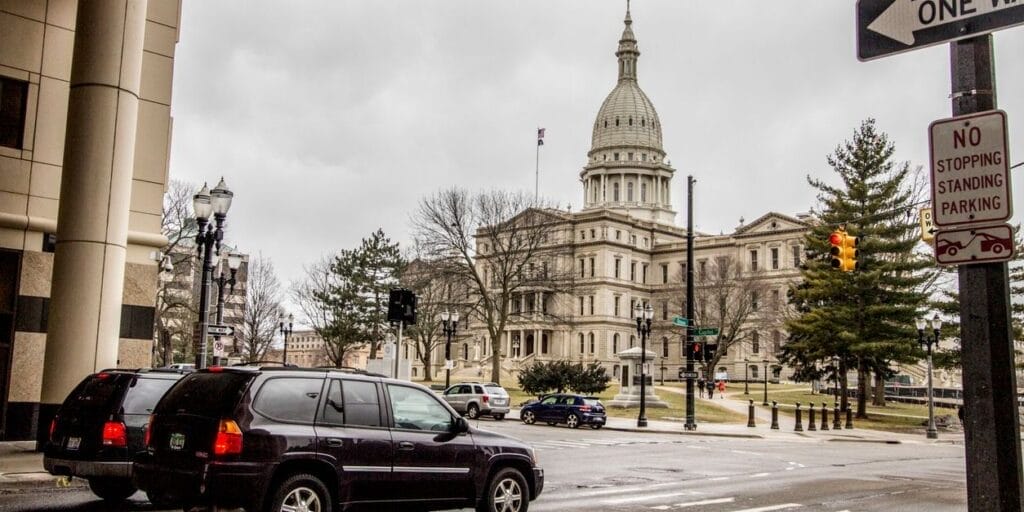
During the 2020 stretch of the COVID-19 pandemic, Michigan Gov. Gretchen Whitmer insisted that America needed a “national plan” to stop the virus.
Turns out, America already had one. Roughly 97% of the money Michigan spent on COVID came from Washington, delivered under President Donald Trump.
Whitmer’s ball of confusion is a symbol of the times. States might not like Washington, or a particular administration in Washington, but they can’t quit it, either.
Nobody has come right out and said it. But through their actions, states have made a declaration of dependence on Washington for basic needs, such as road funding and food assistance.
Federalism was meant as a hedge—a way to keep a powerful national government from extending its tentacles into every corner of American life.
It’s not that the feds are too big to fight. The Taliban controlled Afghanistan prior to the War on Terror. After fighting the U.S. military to a 20-year draw, they picked up where they left off.
Vietnam was a similar story. People fight hard for their homeland.
It’s more that the feds are too rich to buck. If King George III had thought to lead with the carrot and not the stick, we might be colonial subjects to this day.
When America’s founders penned and agreed to the Declaration of Independence in 1776, they were prepared to fight Great Britain and the strongest military force since ancient Rome.
They risked it all to be freed from a government that didn’t even bother consulting the American colonies before imposing taxes on them.
In 1776, independence meant lifting the British boot from America’s neck. In 2026, independence would mean going without the federal money states have grown dependent on.
You won’t find many volunteers to sign that declaration in any of America’s 50 state capitals.
Florida Gov. Ron DeSantis pointed out that when he blocked a Biden administration attempt to relocate Afghan refugees to Florida, Washington simply went around him by working with local governments to achieve their objective.
This showed what states are up against. A state may try to buck Washington, but Washington has a trump card: localism, powered by like-minded local actors willing to enforce its agenda.
With federal dollars—and federally funded positions—to hand out, Washington becomes the loudest voice in every room.
Cooperation with the feds can lead to big grants for “shovel-ready projects” in the next round of stimulus. And there will be a next round of stimulus.
None of this is what the founders envisioned. And if they returned in 2026, they might remind us that the prison door is locked from the inside.
States are not inherently trapped in dependence on Washington; they have either adopted it willingly or acquiesced to it.
But DeSantis showed that states are not without options.
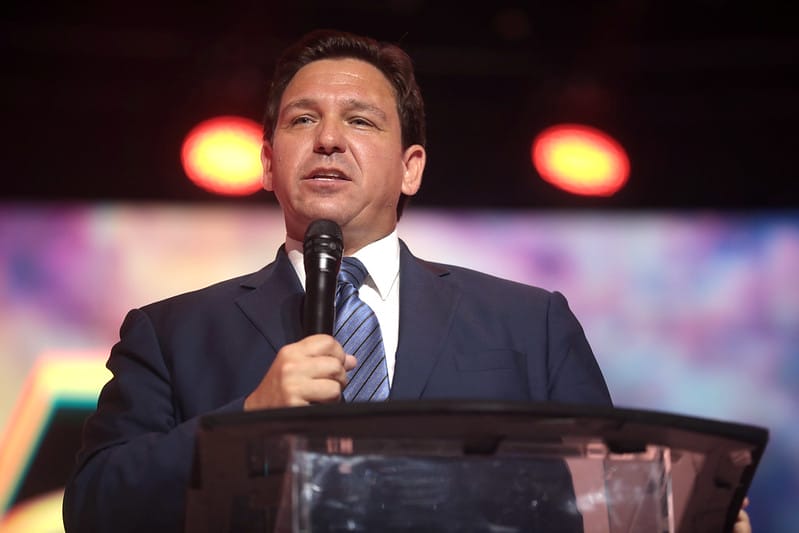
When DeSantis and the feds were on different pages during the Biden years, DeSantis chartered flights to remove illegals from Florida. The most famous among them landed in Martha’s Vineyard.
This was a chess move that started a national conversation. Three years later, refugee resettlement and illegal immigration are fully outside the Overton Window in America.
What the feds did to Florida, Florida did to Martha’s Vineyard.
But even the DeSantis gambit was less a declaration of independence, and more a statement that “we’re not gonna take it.” And even with the DeSantis example, few states have followed Florida’s lead.
In the 2020s, the strongest act of defiance against the federal government—not just a symbolic “no,” but force meeting force—came through Texas’s Operation Lone Star.
Texas Gov. Greg Abbott took over a 47-acre park in Eagle Pass, a major border crossing for illegal immigrants leaving Mexico. U.S. Border Patrol was “strictly prohibited” from the park, which they had used to process immigrants and send them on their way.
When the feds would cut down the barbed wire on border fences, the Texas National Guard put it back up.
By the end of 2024, Texas was boasting that illegal crossings into the state had dropped by 87 percent. Despite all the hard and soft power of the federal government, Texas was the winner in this Mexican standoff.
Abbott and DeSantis have shown that states can declare themselves independent of federal interference if they are led by people with iron will. That’s a big “if.”
How many politicians does that describe? And is your state led by one of them?
James David Dickson is host of the James Dickson Podcast. He’s an independent journalist and historian in Michigan. Join him in conversation on X at @downi75.