Why Iowa?

From a public policy standpoint, Iowa has become a national leader in conservative reform.
On taxes, budgeting, regulation, school choice, and protections for life and civil liberties, the state stands in sharp contrast to neighbors such as Minnesota and Illinois. But policy alone does not fully explain why so many people love Iowa.
“What happened this year went beyond Iowa nice. You showed a humanity that rivals what most of us have seen in our lifetime,” stated Gov. Kim Reynolds in her 2021 Condition of the State Address. Reynolds was referencing the numerous humanitarian acts in response to the COVID pandemic and the devastating storms. Across Iowa, individuals, organizations and businesses stepped up to help one another and their communities during these crises.
“From what I’ve seen, there’s no shortage of character in the people of Iowa. And despite what we’ve been through—or maybe because of it—the condition of our state has never been stronger,” remarked Reynolds. Iowans continually show up, pitch in, provide as much help as they can, and rally to support their communities.
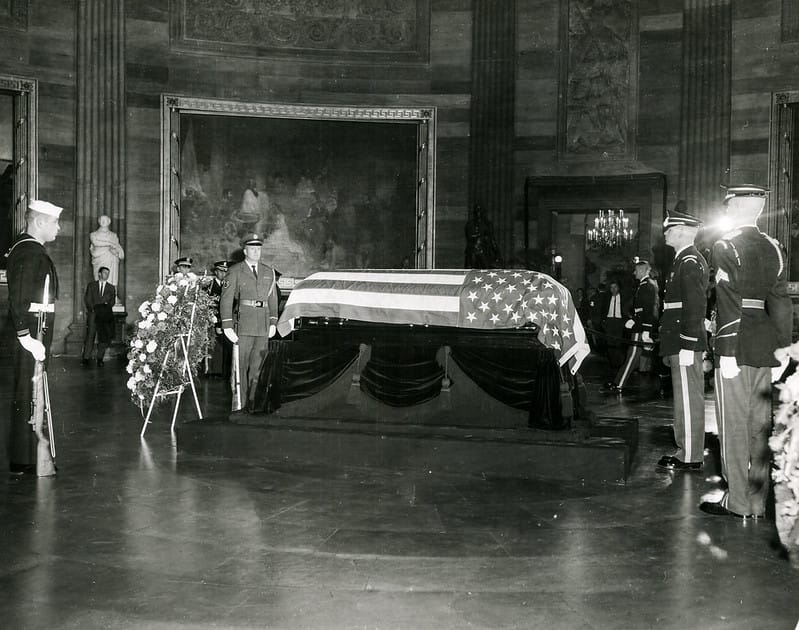
In February, Iowans came to support and honor a 90-year-old veteran who passed away and had no family. This was not the first such occasion. In 2016, hundreds of Iowans gathered to honor another veteran who died without family.
This is just a snapshot of the spirit of community, which makes Iowa a special place to call home. Public policy matters, but it is also the culture that defines the state. Countless stories could be told of Iowans coming to one another’s aid without direction or incentives from government.
Iowa reflects the values Herbert Hoover described in his 1922 book American Individualism. In American Individualism, Hoover argued that the United States was unique in comparison to other nations. Hoover argued that America’s distinctiveness rested not only on its constitutional system, but also on its commitment to equality of opportunity.
Hoover’s notion of equality of opportunity was based on the philosophy of President Abraham Lincoln. Hoover described equality of opportunity as “the fair chance of Abraham Lincoln.” Equality of opportunity meant that every American had the liberty to advance through self-initiative, but also to serve their neighbor and community. In Hoover’s view, individual freedom and equality of opportunity enabled people to work together toward the common good.
Equality of opportunity was at the heart of American individualism, as Hoover argued:
Our individualism differs from all other because it embraces these great ideals: that while we build our society upon the attainment of the individual, we shall safeguard to every individual an equality of opportunity to take that position in the community to which his intelligence, character, ability, and ambition entitle him; that we keep the social solution free from frozen strata of classes; that we shall stimulate efforts of each individual to achievement; that through an enlarging sense of responsibility and understanding we shall assist him to this attainment; while he in turn must stand up to the emery wheel of competition.
Hoover’s American Individualism was similar to some of the themes that Alexis de Tocqueville wrote about in Democracy in America. “If men are to remain civilized or to become so, the art of associating together must grow and improve in the same ratio in which the equality of conditions is increased,” wrote de Tocqueville.
Perhaps one of the best illustrations of Hoover’s philosophy was the devastating 1927 Mississippi River flood. More than 1 million people were affected by the great flood. President Calvin Coolidge turned to Commerce Secretary Hoover to lead the relief effort.
Hoover was ready for the challenge. He was known as the “Napoleon of Mercy,” the “Master of Emergencies,” and the “Great Humanitarian.” This reputation grew out of his relief work during and after World War I, when he helped save millions of people from starvation.
Hoover believed in American exceptionalism and he argued that Americans were unique in their sense of individualism, self-reliance, service, combined with a spiritual foundation. It was this spirit that Hoover called upon to provide relief to those suffering as a result of the flood. Reflecting afterwards on the outpouring of private relief, Hoover remarked, “I suppose I could have called in the whole of the army, but what was the use? All I had to do was to call in Main Street itself.”
This was Hoover’s idea of civil society. It does not require government edicts, given the spiritual foundation and vitality of the nation. In 1948, in a special address in West Branch, Iowa, to celebrate his 74th birthday, Hoover discussed the “meaning of America,” and reflected on Iowa as an example of why the United States is exceptional. He stated:
The meaning of our word “America” flows from one pure source. Within the soul of America is freedom of mind and spirit in man. Here alone are the open windows through which pours the sunlight of the human spirit. Here alone is human dignity not a dream, but an accomplishment. Perhaps it is not perfect, but it is more full in realization here than any other place in the world. Perhaps another etching of another meaning of America lies in this very community. It was largely settled by Quakers over 90 years ago… Everywhere along these treks there sprang up homes and farms. But more vital were the Schoolhouse and the Meeting-house with their deep roots in religious faith, their tolerance and devotion to liberty of the individual. And in these people there was the will to serve their community and their country… That embedded individualism, that self-reliance, that sense of service, and above all those moral and spiritual foundations were not confined to the Quakers. They were but one atom in the mighty tide of many larger religious bodies where these qualities made up the intangibles in the word American.
In January, Gov. Reynolds delivered her final Condition of the State address. In referring to Iowa’s capitol building, Reynolds stated that it is “a place that has witnessed nearly two centuries of Iowa history—moments of crisis and moments of courage, times of uncertainty and times of renewal.”
“Yet through it all, one thing has remained constant: ordinary citizens stepping forward to do the extraordinary work of self-government,” added Reynolds. She described the spirit of Iowa: “Across every one of our 99 counties, our people are hardworking, independent, and strong. They believe in responsibility, in community, and in leaving things better than they found them.” In other words, Iowans are shaped by American individualism.
This is why Iowa is a great state.
Finally, Reynolds stated that Iowans will disagree. “We may disagree. We have disagreed. We will disagree again. But those disagreements have always been rooted in conviction, not indifference—and in a shared belief that Iowa is worth fighting for.”
Conservatives will certainly argue that Reynolds’ policies have continued to make Iowa a great place to live and work. But that success also rests on the older cultural foundation of American individualism.
This is the character of Iowa. As Hoover stated:
The mightiest assurances of our future are the intangible spiritual and intellectual forces in our people, which we express, not by the words The United States, but by the word America. That word America carries meanings which lie deep in the soul of our people. It reaches far beyond the size of cities and factories. It springs from our religious faith, our ideals of individual freedom and equal opportunity, which have come in the centuries since we landed on these shores. It rises from our pride in great accomplishments of our nation and from the sacrifices and devotion of those who have passed on. It lifts us above the ugliness of the day. It has guided us through even greater crises in our past. And from these forces, solutions will come again.
John Hendrickson serves as policy director for Iowans for Tax Relief Foundation.