Roberto Gonzalez on Miami-Dade’s future
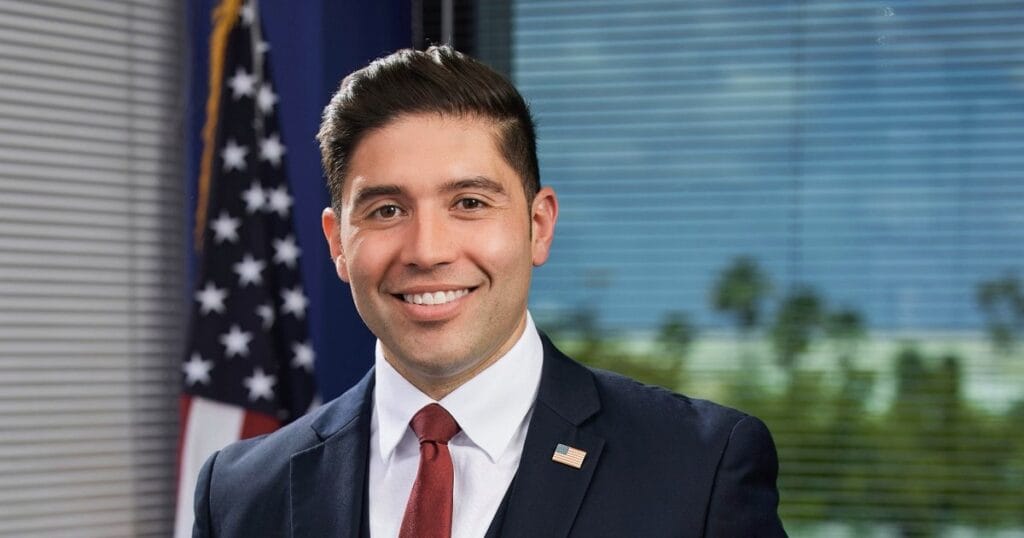
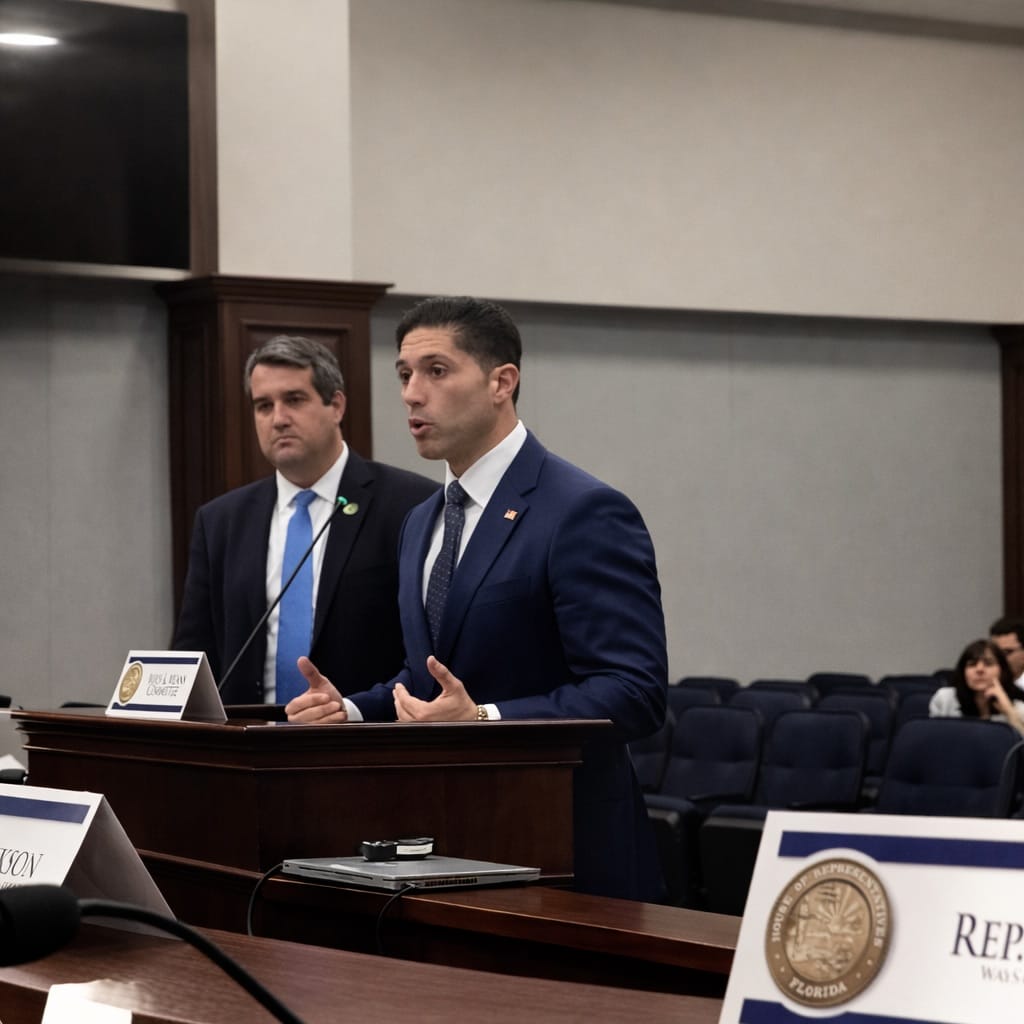
Miami-Dade Commissioner Roberto Gonzalez has quickly emerged as a prominent voice on public safety, housing, and quality-of-life issues in one of the country’s fastest-growing metropolitan areas. Born in Guatemala and raised in Miami after immigrating legally with his parents, Gonzalez brings a personal perspective to debates over immigration, governance, and opportunity. Since taking office, he has focused on issues ranging from HOA accountability and law enforcement to economic development and the future of West Kendall. He recently spoke with American Habits editor Ray Nothstine.
A lot of Americans view Miami-Dade as a place for the rich and famous. What makes it a good home for ordinary families and people trying to build a life there?
Roberto Gonzalez: It’s a great question. We’re the new New York, the new Dubai, the new Chicago — a truly major metropolitan area. But what sets us apart from other big cities is our politics, and that comes directly from the people who live here.
Many residents came from countries deeply affected by socialism, communism, and corruption. They came to Miami to build a better life. Because of that, the political culture here is different from places like New York, Chicago, or Los Angeles. Ideas rooted in socialism or what some call “woke” politics generally do not resonate as strongly here.
Now, are there folks here that lean left? Sure, but for the most part it remains a conservative Mecca.
It is rooted in traditional Hispanic family values. Our Cuban population is very aware of the dangers of communism. From a young age, people hear about the atrocities firsthand. In other places that conversation is more theoretical. Here, people have friends or family members who were directly persecuted.
Even though we have a Democrat mayor in the city of Miami and a Democrat mayor in the county, for the most part, it is very conservative and right-leaning. Gov. Ron DeSantis won here easily. The president won it as well. I believe the next mayor of Miami-Dade is going to be a Republican.
For a long time, cities like New York, Los Angeles, and Chicago have shaped America’s politics and culture because they are major metropolitan centers and they lean left. I think the pendulum is now swinging the other way. We’re the roadmap for what a healthy city can and should be.
We need to find a way to liberate Cuba. It just seems off that in our post-Cold War world, a communist regime exists 90 miles from our shore.
Gonzalez: We’re about to be here for like two hours, man. I was just meeting with the ambassador of Guatemala. I was born there, though I’m an American citizen, and my parents immigrated to this country. That perspective shapes how I see Cuba and the broader region.
One of Miami’s defining features is how closely connected it is to Central and South America. That also means we see firsthand how hostile regimes and U.S. adversaries have worked to destabilize the Western Hemisphere through narco-terrorism, money laundering, and authoritarian politics. Cuba engages in a form of terrorism meant to destabilize our region.
That’s why Iran is a bigger conversation than just nuclear weapons. A lot of people don’t know they are the biggest money launderers in the world. How does this relate to Cuba and Miami? The enemies of the United States, like China, and Russia, have worked deliberately to destabilize Central and South America by aiding or facilitating these narco-terrorist regimes. Specifically, I’m talking about Fidel Castro. Fidel Castro wasn’t just a head of a country. He was one of the greatest drug dealers of all time.
These regimes and narco-terrorist networks use profits from drug trafficking and human trafficking to fund leftist movements across Central and South America. That fuels corruption and destabilization throughout the hemisphere, which then drives mass migration into the United States. Miami is at the forefront of that reality because people like my parents did not leave their country just to try something new. They left because they were fleeing oppression, tyranny, and corruption.
The current administration has done a good job of identifying the real issue in the hemisphere: a deliberate effort to destabilize the region in ways that ultimately affect the United States and create openings for countries like China and Russia to project influence. In my view, Iran is also central to that effort, particularly through money laundering and its broader regional ties. You can see echoes of that instability across the region — in Cuba, in Nicaragua, and recently in Venezuela with Nicolás Maduro, which I remember as a thriving country in the 1990s.

At the same time, the Western Hemisphere is extraordinarily rich in resources. Venezuela has oil and minerals. Chile has copper and lithium. Guatemala has strong agricultural production. In my view, the future strength of the world will depend heavily on the Western Hemisphere. If Central and South America were more stable and worked in closer alignment with the United States, this side of the world would have even greater economic and strategic potential.
How have your personal experiences shaped your views on immigration today? While most immigrants come here peacefully, many Americans are frustrated by the broader lack of accountability and concerns over crime. How has your background informed the way you approach the issue?
Gonzalez: Nobody suffers more from illegal immigration than the actual illegal immigrants. Human traffickers and narco-terrorist networks prey on people in countries like Guatemala, Honduras, and elsewhere in Central America, promising to get them to the United States for a better life — at a steep price. In that sense, illegal immigration often begins with exploitation that amounts to modern-day slavery.
Many of these people have never seen $1,000 in their lives, let alone $10,000, which is often the cost to be smuggled across the border. The lucky ones end up in forced labor. Then you have children, and you have women and men that are put into human trafficking rings. As a matter of fact, the cartels make more money off human trafficking than anything else. Immigration laws are there not only to protect the country, but to protect the immigrant.
There are ways that you can come to this great, amazing country and do it legally. My parents immigrated here legally. I went through the naturalization process. I am an American citizen. I love this country. I am just as American as George Washington, just as American as Benjamin Franklin. I’d die for this country. Doing things illegally only causes chaos for the actual illegal immigrant and for the community.
When you have open borders, like the kind we saw during the Biden administration, then there are many that are coming into this country that are no bueno. They’re not here to do good. We’ve seen Iranian sleeper cells that were found in the United States with Venezuelan passports and brought into this country to cause chaos.
You had to get a lot of the criminals who were here for nefarious reasons out of the country as soon as possible.
After those individuals were removed from the country, we began to see more focused efforts to combat narco-terrorism, human trafficking, and the influence of the Iranian regime, not just in the Middle East but in our hemisphere as well.
Affordability is one of the top issues right now, both nationally and locally. What can local government realistically do to help longtime residents stay in the communities they helped build? What are you focused on, and what ideas can make a difference?
Gonzalez: For one, affordability doesn’t get solved by paying for people’s apartments or giving people free housing.
When I was growing up in Miami, my mom cleaned houses. My dad worked in a warehouse his entire life, and they worked hard so that I could have a better life. I didn’t go to the right private schools. I didn’t get into the best universities, but I had a shot at the American dream. I had opportunity. Opportunity, not handouts, is what solves the affordability crisis.
What are we doing in Miami-Dade County?
Thanks to our great governor, Florida is positioning itself to lead in the space industry. Central Florida already hosts companies like SpaceX and Blue Origin, and the state has created Space Florida to make it easier for aerospace companies to invest and expand here.
For Miami-Dade, the opportunity lies in building a workforce pipeline. In my district, programs like George T. Baker, the BITS program, Miami-Dade College, and Florida International University are helping prepare students for careers in aviation, aerospace, and space engineering. We are also working to designate Miami Executive Airport as a spaceport, not for launches, but to unlock incentives that could attract aerospace and advanced manufacturing firms.
Opportunity and not handouts is what solves the affordability crisis.
I believe aerospace, defense, and space technology manufacturing are part of America’s future, and West Kendall is well positioned to help lead that effort. We are building the workforce and infrastructure now so Miami-Dade can compete in what I see as the next frontier.
Many Americans are frustrated by the sense that people are gaming the system and profiting at taxpayers’ expense, especially in cases like the hospice fraud arrests. What message do you have for residents about accountability, and what role can local government play? What does oversight look like for a county commissioner?
Gonzalez: That opens a conversation about taxes. I’m not a fan of taxes. I believe taxation is theft, to be honest with you. I’m fully on board with Gov. Ron DeSantis’ initiative to eliminate property tax.
Americans are frustrated by how taxpayer dollars are being spent. U.S. Secretary of State Marco Rubio did a good job drawing attention to waste at USAID and to the fact that tax money was being spent on things it should not have funded. Now we are also seeing cases where money was used fraudulently. In Florida, the response has been to put a greater emphasis on financial oversight. Gov. DeSantis appointed Blaise Ingoglia as the state’s CFO with that in mind.
Before Ingoglia, I do not believe enough people fully understood what a CFO could do in this role. He took a DOGE-like approach to the office and started auditing counties and cities, uncovering billions of dollars in taxpayer funds that were either misspent or used fraudulently.
I think the same thing is happening across the country. Marco Rubio, through USAID, along with Elon Musk and the federal DOGE effort, helped expose how much public money was being wasted. Ingoglia is taking an aggressive approach at the state and local level. We just went through a budget process where I identified millions of dollars in waste myself.
It reveals that taxpayer money is too often being spent on things that do not help citizens or residents. And if we can truly get a handle on that fraud and misspending, that opens the door to meaningful tax relief.
As a county commissioner, I can tell you this issue extends into the private sector as well, especially with homeowners associations. In my district, we saw cases where people running HOAs were mishandling funds, committing fraud, and funneling money into private accounts. I responded by establishing a point of contact with the Miami-Dade Sheriff’s Office for residents dealing with fraud issues.
We also partnered with State Attorney Katherine Fernandez Rundle on a task force focused specifically on HOA misconduct, and that effort led to arrests. The same model of oversight and accountability can be applied to taxpayer dollars at the local level.
You have touched on this already, but are you concerned by the rise of democratic socialist ideas in major cities? You explained the dynamics of Miami-Dade, but do you worry those views could gain traction there too, especially among younger voters and people moving into the area?
Gonzalez: Ronald Reagan said that freedom is only one generation away from extinction. It’s extremely important that we are always concerned with this and talk to our kids about these issues.
As a conservative, we need to do a better job of meeting young people where they are. The president has done that by going on podcasts and using platforms like X and Instagram. We must engage younger voters in the spaces where they already are.

History shows that the pendulum swings. After the counterculture of the 1960s and 1970s came the Jesus Revolution, which had a major cultural and spiritual impact. I believe we are seeing a similar swing today. After the woke movement, after COVID, and after seeing people leave states like New York and California for places like Florida and Texas, I believe many young people are moving in a more conservative direction.
The question now is what conservatives do with that moment. We cannot get complacent. At the county level, we focus on young people between 16 and 35, a group many politicians overlook. It’s a mistake to dismiss them. Many want to get involved and understand local politics. Our job is to give them a platform and show them why their involvement matters.
You know this: conservatives ceded schools for so long. I’ve seen encouraging signs of reform in higher education led by Gov. DeSantis in Florida. It’s refreshing because I think many in state government ignored education for too long.
Gonzalez: He’s America’s governor.
I believe he’s responsible for those “Free State of Florida” welcome signs. I love those. What does “Free State of Florida” mean to you when you hear it?
Gonzalez: Every time I hear it, I’m very appreciative, and I thank God that we have such a great governor. A lot of folks don’t understand that when DeSantis won the governor’s race, he was running against a gentleman by the name of Andrew Gillum, who ended up having a lot of problems.
You have to ask what Florida would look like if DeSantis had not been governor. He had the tenacity to fight back against what was happening during COVID and against the lockdown mentality at the time. He also put forward leaders like Surgeon General Joseph Ladapo, who was talking early about monoclonal treatments, medical choice, and the importance of asking hard questions.
When I hear ‘Free State of Florida,’ that is standing up to government overreach. That is why so many people came here. Florida offered a different model — low taxes, a business-friendly environment, support for families, and a real commitment to parents having a say in their children’s education.
One of the most significant things DeSantis did, in my view, was expand the Step-Up program. It gave parents more freedom to choose the kind of education they want for their children by allowing public education dollars to follow the student, including to private and religious schools.
That is why I say Florida is different. We have choices here — medical choices, educational choices, and economic opportunity — and the state moved in that direction before much of the country did.
You mentioned the aerospace industry in Miami-Dade. What else is happening there that you’re excited about that you might not have mentioned or something you want to tell people about the area if they don’t have a lot of familiarity with it?
Gonzalez: As I said earlier, I believe Miami-Dade is becoming one of the world’s major metropolitan centers, and what makes it different is its conservative political culture. What I am focused on now is bringing more seriousness to the county — more authentic conversations about policy, economics, and ideas.
I believe Miami-Dade can become a leader in the United States and across the Western Hemisphere. But to do that, we need to act like a major center. We need more think tanks, more policy-driven institutions, and more professionals who want to shape serious conversations here.
Think about New York in the late 1990s. People were not just moving there for restaurants or entertainment. They were going because it was a center of leadership, finance, and major economic debate. I want Miami to become that kind of place.
You’re already getting a lot of refugees from New York.
Gonzalez: Absolutely.